What to say to your child before an exam
Say less, listen more, and talk about the next step rather than the mark. Tonight, start with one sentence: “You've done enough for tonight. Time to sleep.”
What to say before an exam — the sentence card
A free printable PDF, no sign-up.
UNICEF's page “What is stress?” names school as a common reason children feel stressed, and says taking exams can make them feel overwhelmed. On the night before an exam many parents search for the right words and end up saying too many. It works better to say less, listen more, and talk about the next step rather than the mark. Here are sentences for three moments — the night before, the morning, and results day — each beside what to avoid and why.
Three rules before the sentences
- Listen before you advise. The NHS page “Help your child beat exam stress” (last reviewed 8 March 2023) tells parents to listen to their child, give them support and avoid criticism, and not to add to the pressure of exams.
- A few nerves are normal. The same page calls nervousness a natural reaction to exams, and suggests reminding your child that it's normal to feel anxious. So don't ask your child not to feel what they feel.
- A result is not the end of the road. It also advises being reassuring and positive before an exam, and letting your child know that failing is not the end of the world.
The night before: what to say and what to avoid
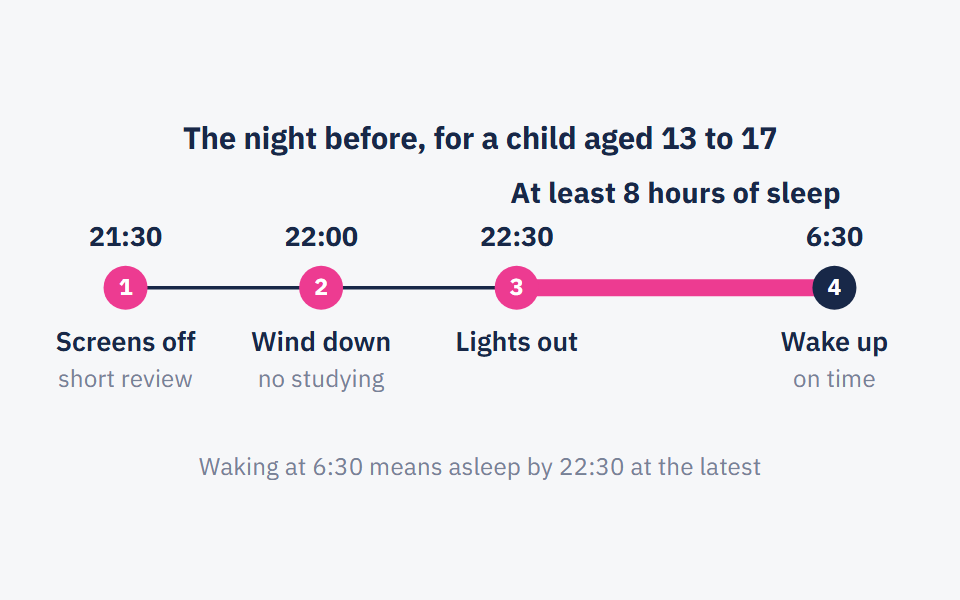
The goal tonight is that they sleep on time, feeling as ready as they can be. So don't start anything new with them after dinner.
| Instead of | Say | Why |
|---|---|---|
| “Do another hour, it's still early.” | “You've done enough for tonight. Time to sleep.” | The NHS says good sleep improves thinking and concentration, and that cramming all night before an exam is usually a bad idea. |
| “Don't worry, it's an easy exam.” | “It's normal to feel nervous before an exam. What worries you most?” | The same page calls nervousness a natural reaction to exams. “Don't worry” asks them not to feel what they feel; the question opens a conversation. |
| “Your cousin got full marks.” | “You know this unit better today than you did a week ago.” | UNICEF suggests noticing and praising something your teen is doing well, even something small. A comparison is extra pressure they don't need. |
| A stream of advice while they're upset | “Do you want my help, or do you just need to vent?” | This is the first of three phrases UNICEF suggests for upset teens: some want advice, some mainly want to talk, and asking first tends to make them more receptive. |
If they tell you they're upset, UNICEF's second phrase fits here: “Of course you're upset. Anyone in your shoes would be.” Sleep before an exam gives the hours of sleep by age and a routine for exam week.
The morning: a short sentence, not a last revision
The morning is not the time for a new lesson, or for quizzing them on formulas in the car. One or two sentences are enough.
| Instead of | Say | Why |
|---|---|---|
| “Everything depends on this exam.” | “Whatever the result, we'll work out what to do next.” | The NHS advises being reassuring and positive before they go in, and letting them know that failing is not the end of the world. |
| Revision questions over breakfast | “Eat your breakfast. Revision finished yesterday.” | The same page says a balanced diet can help children feel well during exam periods. Last-minute questions remind them of what they don't know; that part is our view. |
| “Focus, and don't you dare make mistakes.” | “Start with the question you know, then go back to the harder ones.” | Our advice: a sentence that gives them a step to take, not a fear to carry. |
| “I'll be waiting for your mark.” | “I'm proud of the work you put in this week.” | Praising effort you saw yourself is positive and honest, and doesn't tie your approval to the mark. That is our view too. |
After the exam, and on results day
The NHS advises encouraging your child to talk each exam through with you, focusing on what went well rather than the hardest questions, and then moving on. Results day needs the same calm, whether the result is what they hoped for or not.
| Instead of | Say | Why |
|---|---|---|
| “How many did you get wrong?” | “What went well today?” | That is the NHS advice after each exam: what went well first, then move on. |
| “You've let me down.” | “Thanks for showing me. What do you make of it?” | UNICEF advises listening to a stressed child, speaking kindly and reassuring them. |
| A long talk while you're angry | “I need a little time. Let's talk about it after dinner.” | UNICEF advises not discussing a problem while you're angry: step away and talk later. |
| “Why didn't you get a higher mark?” | “It's not the end of the world. Let's pick one step for the next exam together.” | UNICEF advises that when your teen is frustrated, you work with them to brainstorm ways to solve the problem. |
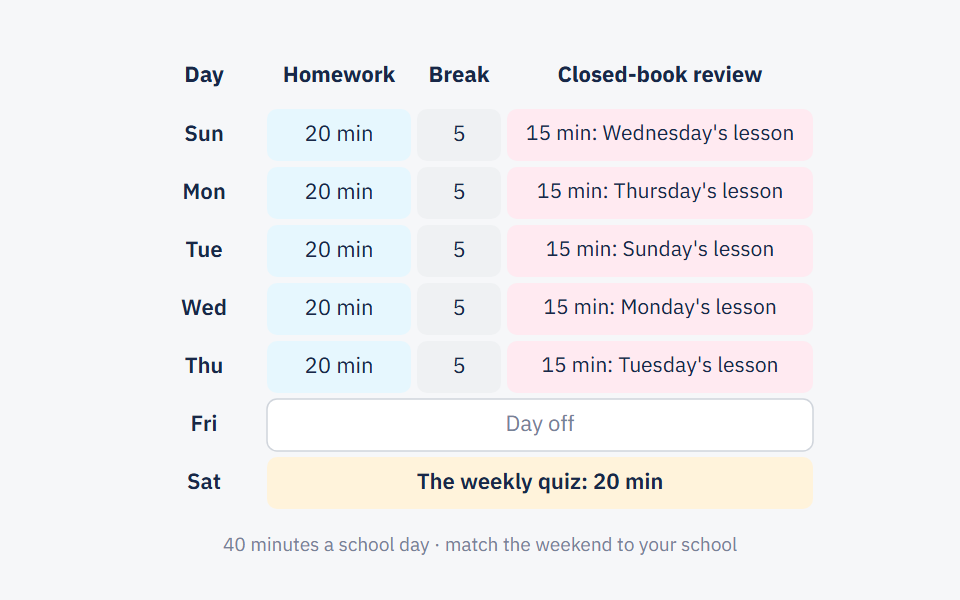
If the result is good, ask: “What did you do this time that helped?” The answer is a plan for the next exam. If the problem is organising time before exams, a weekly study timetable spreads revision across the days.
When it is more than exam nerves
The NHS page lists signs a stressed child may show: worrying a lot, feeling tense, headaches and stomach pains, not sleeping well, being irritable, losing interest in food or eating more than normal, not enjoying activities they used to enjoy, being negative with a low mood, and feeling hopeless about the future. It advises seeking help if anxiety or low mood is severe, persists and interferes with everyday life, says that seeing a GP is a good place to start, and that talking to their teachers may help if you think your child is not coping.
UNICEF's page “When to help your teen find mental health support” lists further signs, among them intense worries or fears that get in the way of daily activities, and feeling very sad or withdrawn for more than two weeks. It advises seeking help if changes remain for a few weeks and interfere with everyday functioning, from a primary health care provider or a psychologist. If you fear your teen is a danger to themselves or others, call your national helpline, as the same page advises.
We suggest starting with the school counsellor, or with your family doctor, as the NHS suggests. These sentences ease ordinary exam nerves; they do not diagnose or treat anything.
What words alone can't do
The best sentences fail when your child walks into the exam without having studied or slept. Words ease nerves; they don't replace preparation. So start before the last night: revision spread across the week, enough sleep, then one calm sentence in the morning. And if your child doesn't want to talk, don't push; stay close, and offer to talk later.
Frequently asked questions
- How do I calm my child's nerves before an exam?
- Listen before you advise, tell them a few nerves are normal, and make sure they sleep on time. Avoid comparisons with others and talk about the mark.
- What should I say to my child on the morning of an exam?
- One or two sentences, such as “Start with the question you know” and “Whatever the result, we'll work out what to do next.” Don't quiz them in the morning.
- What do I say if my child fails or gets a low mark?
- Thank them for showing you, ask what they make of it, and wait if you're angry. Then choose one step for the next exam together.
- When does test anxiety need a professional?
- When it is severe, persists and interferes with everyday life, as the NHS puts it. Start with the school counsellor or your family doctor.
Sources
Every fact in this post that we did not produce ourselves comes from one of these sources.
- Help your child beat exam stress — NHS (UK National Health Service), 2023-03-08 (last reviewed)
- What is stress? — UNICEF Parenting, undated (read 2026-10-22)
- 3 phrases to support upset teens — UNICEF Parenting, undated (read 2026-10-22)
- How to support your teen during stressful times — UNICEF Parenting, undated (read 2026-10-22)
- When to help your teen find mental health support — UNICEF Parenting, undated (read 2026-10-22)
Written with String's editorial team: we use AI for research and first drafts, and a person checks every fact and every source before anything is published. How we write
Founder and CEO, String
“I grew up in a house of teachers.” I spent a year designing the STEM program for one of the largest school groups in Saudi Arabia, have written curriculum by hand, trained robotics coaches and sold software into schools, then left that job to build String in Amman.