What to ask before the free first year of any platform ends
Ninety days before the free year ends, ask the platform for written answers in six groups: data export, the price after the free year, notice periods, what happens to your data if you leave, contract length, and support. A good answer is a file format, a number or a date; an answer that puts the details off is a reason to ask again.
Questions to ask before any platform's free year ends
A free printable PDF, no sign-up.
This list is for the owner or principal of a school that has started its first year on a free platform, whichever platform it is. A free year takes price off the table at the start, but it moves the question to the end — when teachers are used to the platform, and a full year of the school's data is stored in it.
That is the moment a school can most easily get it wrong. An EdSurge article published on 24 June 2024, on research The Decision Lab carried out in 2022 by interviewing and surveying over 225 edtech decision-makers in US school districts, describes two biases at the pilot stage: the zero-risk bias, where districts hesitate to discontinue a program after initial trials, and the sunk-cost fallacy, where they continue with an edtech product simply because of prior investments of time and resources. Questions asked in writing before the year ends put the decision on the answers, not on habit.
The questions: six groups, each with what a good answer sounds like
Send the questions in writing and ask for the answers in writing. What follows each question is what we would count as a good answer; if the answer you get is vaguer than that, ask again before you decide.
1. Data export
- In what formats can we export our data? A good answer: a format for each kind of data — spreadsheet files (CSV or Excel) for records, grades and attendance, and the original files for anything teachers uploaded.
- What does the export include, and what does it leave out? A good answer: a written list — student records, grades, attendance, teacher-made materials, and messages if they are stored. Anything not exported is named.
- Who runs the export, how long does it take, and is there an extra fee? A good answer: the school runs it itself from the settings, or the company does it within a written number of working days, at no extra fee.
- Can we test the export now? A good answer: yes. Export one class before the year ends, open it, and check that it is complete and readable.
2. The price after the free year
- What is the price for year two, and how is it calculated? A good answer: a written quote that states the unit — per student, per school, or by the parts you use — and what the price includes.
- What stays free, and what becomes paid? A good answer: a list of the parts in each group, not “plans vary”.
- Does the price change in year three, and what is the cap on increases? A good answer: a written cap on increases in the contract, or a price fixed for its whole term.
3. Notice and renewal
- When will we receive the price before the free year ends? A good answer: a set number of days, in writing, that falls before the school prepares next year's budget.
- Does the subscription turn into a paid one automatically? A good answer: no, not without the school's written consent.
- Will you tell us about changes to your privacy policy, and ask for our consent to material changes? A good answer: yes — written notice before the change, and the school's consent to any change in how data already collected is used.
4. Your data if you leave
- How long does our data stay available to export after the subscription ends? A good answer: a set number of days during which read-only access and export continue.
- When is the data securely destroyed, and do we get written confirmation? A good answer: a set date after the contract ends or after the school asks, and written confirmation once it is done.
- What happens to teacher, student and parent accounts? A good answer: they close on a date the school knows in advance, so it can tell parents before then.
5. Contract length
- How long is the contract after the free year, and can it be one year? A good answer: written options with their terms and prices, including a one-year option.
- Can we leave before the contract ends, and on what terms? A good answer: written terms, a notice period, and what the school pays if it leaves.
- Will everything you promised us in the sales meeting be written into the contract? A good answer: yes, in the contract itself or in a signed annex.
6. Support
- What support does the price include? A good answer: the channels, hours, language and response time, in writing.
- Who is our contact after the free year ends? A good answer: a named person, not just a general email address.
- Does support include training teachers who join in year two? A good answer: yes, with how it is done and how often.
When to ask: the last ninety days of the free year
90 days before: send the questions
Send the full list in writing, with a date for the answers. If the school prepares next year's budget before then, start before the budget.
60 days before: test the export and compare
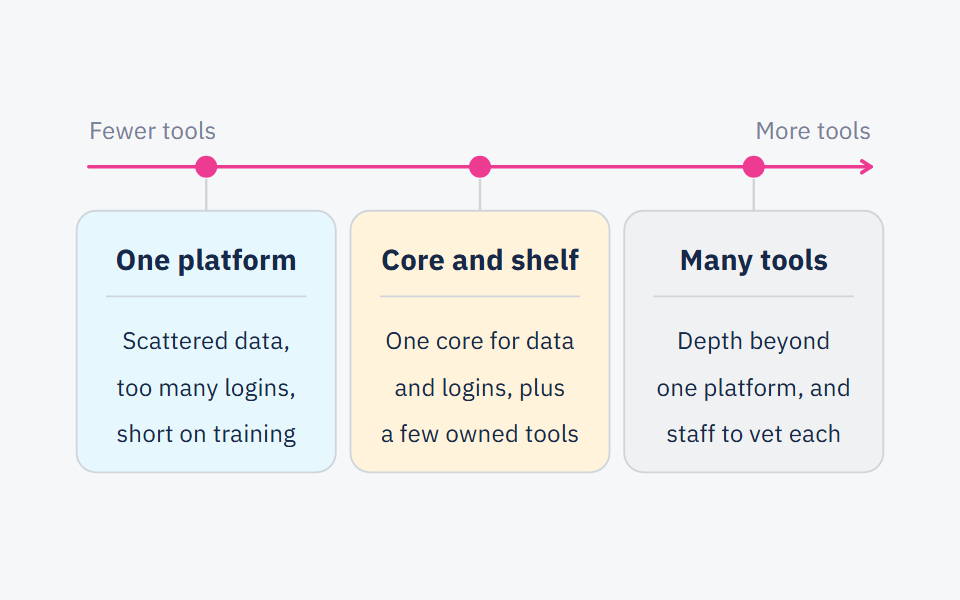
Export one class and open it. Then read the answers against the same criteria you used to choose the platform — such as the table in one platform or many tools — and against another platform's offer if you have one.
30 days before: decide
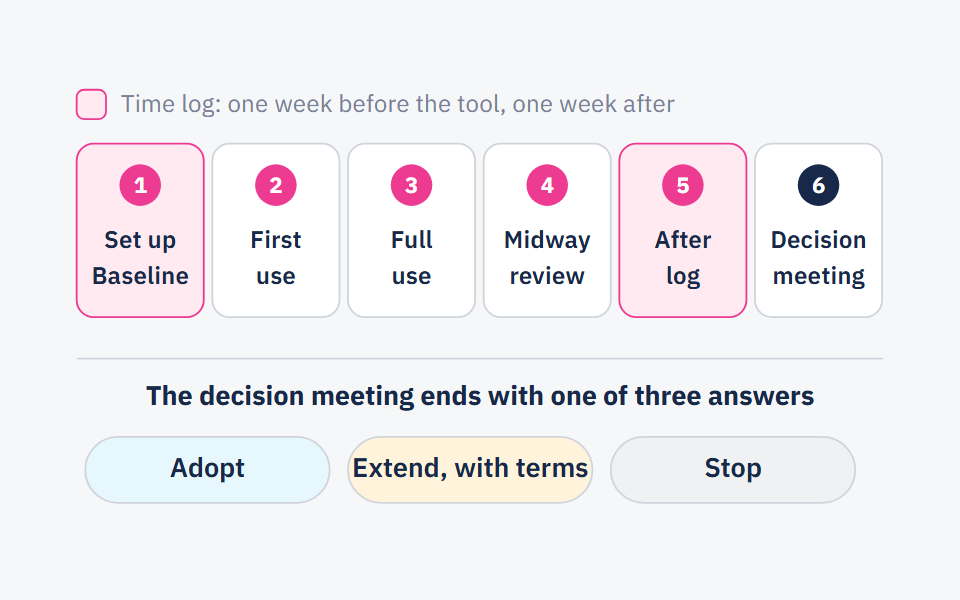
You have three answers: renew as it is, renew on written terms, or leave. They are close to the three answers that close the decision meeting in the six-week pilot plan.
On the last day: export or renew
If you are leaving, export everything before the accounts close, tell parents the closing date, and ask for written confirmation of when the data will be destroyed. If you are renewing, put the end of next year's term in the school calendar now.
Why each group: the mistake it prevents
- Export: data you cannot get out makes renewal a decision someone else has made for you. Testing the export now costs less than finding a gap after the subscription ends.
- Price: a spoken quote or a “from” price is not enough to build a budget on. A cap on increases protects year three, not just year two.
- Notice: automatic renewal turns silence into consent. The Privacy Questions for Service Providers published by CoSN, the professional association for K-12 edtech leaders, ask whether a provider will notify the school of changes to its privacy policy, and whether it will ask for the school's consent to material changes. Among material changes it lists changes in how personal information already collected is used, and any lessening of protections the provider has stated.
- Leaving: CoSN's list says personal information should typically be kept only for as long as is necessary for the purpose it was provided for, and that the school must know the time frame to decide whether it agrees with the retention period. Where a contract has no end date, the provider may destroy data after a period without use, or it may be up to the school to ask for deletion.
- Contract length: a longer contract at a lower price can be a good deal, but it raises the cost of a mistake. Know the exit terms before you compare prices.
- Support: a teacher who joins in year two needs the same training colleagues had in year one. If it is not included, that is a cost the price did not show.
When these questions are not enough
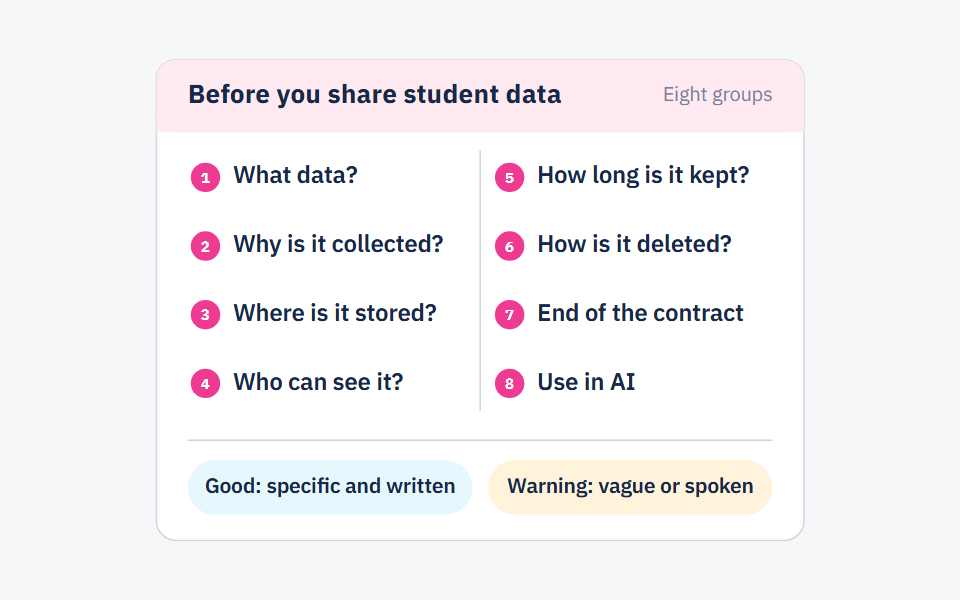
This list fails when it is asked too late. If the platform has become the home of all the school's records, leaving it is a project, not a month's work. So ask the export and exit questions before you start, not before you finish, alongside the questions a school asks before sharing student data. And if the platform is part of one of the priorities in your school development plan, put the end of the free year in the plan's monthly monitoring table.
Good answers do not mean the platform is useful to your school. Use decides that: do teachers use it in real lessons, and has it saved time? The list protects the school from bad terms, not from a tool it does not need.
Frequently asked questions
- Are free education platforms really free?
- Some are free for good, some are free for a period and then paid, and some are free only in part. Ask two questions before you start: what stays free after the first year, and what happens to our data if we do not pay?
- When should a school start negotiating a platform renewal?
- We suggest at least ninety days before the free year ends, and before next year's budget is prepared if that comes first.
- What happens to student data if the school does not renew?
- The contract and the terms of use decide it. Ask in writing how long the data stays available to export, when it is destroyed, and whether the school gets written confirmation.
- Where can I get an edtech renewal question list as a PDF?
- At the top of this page: the key questions on one page, with space for the written answer and its date, free and with no sign-up.
Sources
Every fact in this post that we did not produce ourselves comes from one of these sources.
- Privacy Questions for Service Providers (CoSN Student Data Privacy Initiative) — CoSN, the Consortium for School Networking, 2024-05
- How District Leaders Make Edtech Purchasing Decisions (Caitlin McLemore and Jayden Rae) — EdSurge, 2024-06-24
Written with String's editorial team: we use AI for research and first drafts, and a person checks every fact and every source before anything is published. How we write
Founder and CEO, String
“I grew up in a house of teachers.” I spent a year designing the STEM program for one of the largest school groups in Saudi Arabia, have written curriculum by hand, trained robotics coaches and sold software into schools, then left that job to build String in Amman.